
Abstract
Background. Pornography use has become increasingly accessible, yet research on problematic pornography use (PPU) among women remains limited. While previous research has focused on men, recent findings suggest that PPU may be associated with psychological or sexual effects on women. However, the relationship between PPU, mental health and sexual functioning in women remains not sufficient, highlighting the need for further investigation.
Objectives. The aim of this study was to assess the prevalence of problematic pornography use (PPU) among women aged 18-40 years and to investigate its associations with depressive symptoms, anxiety and sexual functioning.
Methods. An anonymous online survey study was conducted among 197 women aged 18-40 years. Participants completed the Problematic Pornography Consumption Scale (PPCS-6), the Patient Health Questionnaire-9 (PHQ-9), the Generalized Anxiety Disorder Scale-7 (GAD-7), and the Arizona Sexual Experience Scale (ASEX). The collected data was analysed using Microsoft Excel and IBM SPSS Statistics. Descriptive statistics, Pearson correlations, independent-samples t-tests, and chi square tests were applied.
Results. An increased risk for PPU (PPCS-6 ≥ 20) was observed in 10.2% of participants. Higher PPCS-6 scores were significantly associated with greater depressive symptoms (r = 0.23, p = 0.001) and anxiety symptoms (r = 0.17, p = 0.015). Women in the elevated risk group reported significantly higher depressive symptom scores compared to the lower-risk group (p = 0.012). No significant association was identified between PPU and sexual functioning measured by ASEX scale (r = -0.09, p = 0.205). Relationship status also showed no significant association with PPU or sexual functioning.
Conclusions. The findings suggest that problematic pornography use among women is more linked with psychological distress than with sexual dysfunction. These findings demonstrate the importance of considering mental health when examining problematic pornography use in female populations. PPU could serve as an early indicator of the need for mental health interventions.
Keywords: Problematic pornography use, women, depression, anxiety, sexual functioning.
INTRODUCTION
In recent years, pornography consumption has become widespread and easily accessible across all age and socioeconomic groups. Research indicates that approximately 60.2-91.5 % of adults have viewed pornographic content at least once in the past month, with some engaging in regular use [1]. Approximately 1-23 % of women reported problematic pornography use [2]. Only around 1-1.2 % of women identify as being addicted to pornography [3]. Due to substantially higher consumption rates among men, the majority of earlier research on pornography use and its problems has been predominantly focused on males [4]. However, recent epidemiological data suggest a shift in this pattern. The prevalence of problematic pornography use (PPU) among women appears to be rising, challenging the traditional view of pornography use as an exclusively male phenomenon [5,6].
In contrast to men, women’s pornography consumptions are characterized by greater diversity in content and especially format. Apart from visual pornography (e.g., video-based material), women more frequently engage with written erotic content, erotic narratives, fanfiction, and audio pornography [5,7]. These forms of consumption are often oriented toward fantasy, emotional intimacy and relational contexts, and may serve purposes beyond sexual arousal alone [8]. This makes the assessment of PPU among women particularly complex. Women’s motivations for pornography use are more often linked to leisure activities, stress management and emotion regulation. This may influence the development and expression of PPU differently than in male populations [9].
Contemporary research shows that young women experience symptoms of depression and anxiety more frequently than men. Consequently, psychoemotional difficulties represent a significant risk factor for PPU among women, where such use is often conceptualized as an attempt to regulate negative affect [5,10]. Body image concerns and self-esteem difficulties are particularly important factors in this context. Societal expectations surrounding female sexuality and desirability, combined with the frequent portrayal of unrealistic female body standards in erotic content, may contribute to diminished self-esteem, distorted sexual self-perception and heightened psychological distress [8].
At the same time, the impact of pornography on women’s sexual functioning remains a subject of debate in literature. While some publications suggest neutral or even positive effect, an increasing number of studies report associations with sexual arousal difficulties, reduced sexual satisfaction, orgasmic problems or dyspareunia [11,12]. Desensitization, elevated arousal thresholds, decreased responsiveness to partner’s sexual stimulation, as well as emotional factors such as guilt, shame and internal conflict related to pornography use, are all possible proposed mechanisms [7]. Additionally, pornography consumption has been linked to poorer relationship quality and reduced emotional intimacy, which may further contribute to sexual dysfunction [13].
Despite growing interest, empirical evidence on PPU among women remains fragmented. Several studies report weak or inconsistent associations between the frequency of pornography use and sexual or psychological outcomes. They emphasize that women’s patterns of use and experiences related to it may be more complex than those observed in men [14].
Importantly, research examining pornography use and its problems among women in Lithuania remains extremely scarce. While Lithuania reports one of the highest prevalences of depression and anxiety among adults in the European Union, recent data suggest that younger Lithuanians exhibit different psychosocial patterns. Therefore, it is important to explore whether digital media and sexual content is associated with psychological and sexual health indicators in this cohort. A study examining the associations between PPU, psychoemotional well-being and sexual functioning in a population of young women is both timely and necessary. Such research may help identify risk factors and improve understanding of gender specific mechanisms underlying PPU.
METHODS
Study design and setting. A cross-sectional quantitative anonymous survey was conducted in Lithuania using an anonymous online survey via the Google Forms platform. To increase participant recruitment, the survey link was distributed publicly via social media platforms (e.g., Facebook, Instagram and online communities) between August and November 2025.
Participants and recruitment. The study population consisted of women aged 18-40 years. The age range was selected to focus on women of reproductive age, representing a population with active sexual life and increased exposure to digital sexual content. Inclusion criteria were: (1) female gender and (2) age between 18 and 40 years. Other responses were excluded from the analysis. A total of 197 valid responses were included in the final sample.
Measures. The questionnaire consisted of demographic and psychosocial questions and four standardized instruments:
- Problematic Pornography Consumption Scale – Short Version (PPCS-6), used to assess the risk of PPU [15].
- Arizona Sexual Experience Scale (ASEX), used to evaluate sexual functioning [16].
- Patient Health Questionnaire-9 (PHQ-9), used to evaluate depressive symptoms [17].
- Generalized Anxiety Disorder Scale-7 (GAD-7), used to evaluate anxiety symptoms [18].
Internal consistency of the study instruments was assessed using Cronbach’s alpha. In the present sample, Cronbach’s alpha was 0.88 for PPCS-6, 0.81 for ASEX, 0.88 for PHQ-9, and 0.91 for GAD-7. All instruments were administered using Likert-type response scales. All questionnaires were in Lithuanian. If validated Lithuanian versions were not available, the instruments were translated into Lithuanian by the authors and reviewed for linguistic clarity and consistency. Permission to use standardized instruments was obtained from the original authors or were used in accordance with the respective usage guidelines. The instruments used in this study are widely validated and commonly applied in clinical and research settings. Demographic and psychosocial variables included age, relationship status, sexual orientation, and present mental health disorder diagnosis.
Statistical analysis. Statistical analyses were performed using Microsoft Excel and SPSS version 30.0. A significant level of 0.05 was applied. Descriptive statistics (means, standard deviations, percentages) were used to summarize the data. Associations between variables were assessed using Pearson’s correlation coefficient. Group differences were examined using independent-samples t-tests and associations between categorical variables were evaluated using the chi-square test.
Ethical considerations. The study was based on an anonymous online survey with no collection of personally identifiable data. According to local regulations, ethical approval was not required for this type of study. Participation was voluntary and informed consent was obtained electronically from participants prior to completing the questionnaire.
RESULTS
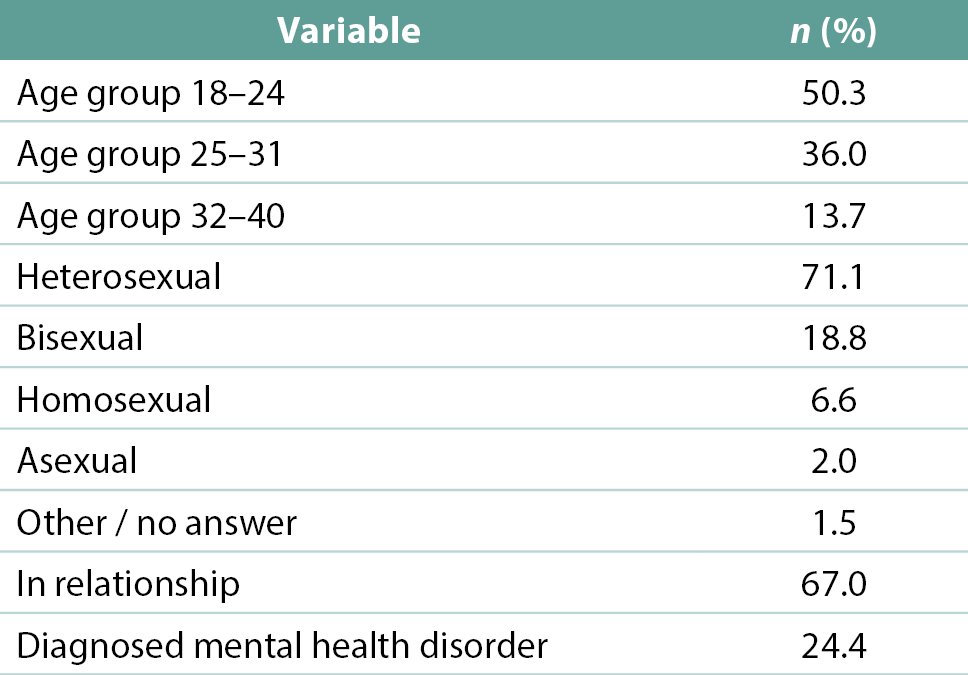
Sample characteristics. The sample characteristics are presented in Table 1.
PPU, depressive symptoms and anxiety. Based on the PPCS-6 scale, the mean total score was 10.99 ± 6.16 and 10.2 % of women met the criteria for elevated risk for problematic pornography use (PPCS-6 ≥ 20). According to the PHQ-9 scale, 49.7 % of all respondents had moderate or severe depressive symptoms (PHQ-9 ≥ 10). This relatively high prevalence may reflect a self-selection bias, as individuals experiencing psychological distress could have been more likely to participate.
Women with elevated PPU risk had significantly higher depressive symptom scores compared to the lower-risk group, while differences in anxiety were not statistically significant (Table 2).

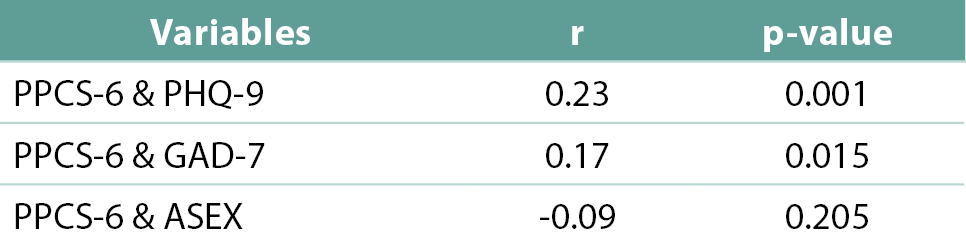
Sexual functioning. According to the ASEX scale, the mean sexual functioning scores was 15.08 ± 4.98. 41.6 % of respondents met at least one criteria indicative of sexual dysfunction. 22.3% of women scored ≥ 19 points on the ASEX scale, 39.6 % scored ≥5 on at least one of the questions and 25.4% scored ≥ 4 on three or more questions. Pearson correlation analysis demonstrated that higher PPCS-6 scores were significantly associated with higher depressive symptom scores (PHQ-9 r = 0.23, p = 0.001) and higher anxiety symptom scores (GAD-7 r = 0.17, p = 0.015). In contrast, PPU was not significantly related to sexual functioning scores (ASEX r = -0.09, p = 0.205). Correlation results are presented in Table 3.
PPU by age and sexual orientation. Chi-square analysis showed that problematic pornography use risk did not significantly differ across age groups (χ²(2) = 1.43, p = 0.490). The highest prevalence of elevated PPCS-6 scores was observed in 25–31-year group (11.3 %), the lowest prevalence was noted in 32–40-year group. No statistically significant differences in PPU were observed across sexual orientation categories (χ²(4) = 2.33, p = 0.676).
Relationship status. Women without a romantic partner showed a higher but not statistically significant prevalence of elevated problematic pornography use risk (13.8 %) compared with those women who had a partner (8.3 %) (χ²(1) = 0.91, p = 0.340). Independent samples t-test demonstrated that PPCS-6 scores did not significantly differ between respondents with or without partner (t(195) = 0.80, p = 0.423). Women without a romantic partner reported significantly higher depressive symptom scores compared with women with a partner (PHQ-9 mean 12.66 ± 6.57 vs 9.15 ± 5.34, t(195) = 4.01, p < 0.001), whereas differences in anxiety (GAD-7 10.00 ± 5.40 vs 8.89 ± 5.40, t(195) = 1.51, p = 0.134) and sexual functioning (ASEX 15.86 ± 5.23 vs 14.70 ± 4.82, t(195) = 1.55, p = 0.123) scores were not statistically significant.
DISCUSSION
This study examined the prevalence of problematic pornography use (PPU) among women aged 18-40 years and explored its possible associations with both mental health and sexual functioning problems.
Our presented study showed a 10.2 % prevalence of elevated risk for PPU among women in Lithuania based on the PPCS-6 scale. This finding contributes to the growing body of evidence indicating that PPU is also present among women, possibly challenging the „gender-gap” narrative, which historically characterized PPU as a predominantly male issue. Our findings are similar to recent cross-cultural research that suggest female PPU (using PPCS scale) rates range between 0.72 % and 7.01 % across 42 countries, depending on the screening tool used [19]. However, a 2022 study in Poland showed that PPU frequency is approximately 13% in women [20]. Given Lithuania’s cultural and historical proximity to Poland (shared past within the Polish-Lithuanian Commonwealth and Soviet-era repression, comparable religious traditions, etc.) these findings may be considered contextually relevant to our population. Based on our results, the observed prevalence appears comparable to higher estimates reported in Western samples. It is important to note that PPCS-6 questionnaire indicates risk, not diagnosis.
Furthermore, no significant age-related differences were observed in this sample (χ²(2)=1.43, p=0.490). This does not support the assumptions regarding a phenomenon of „digital native” young adults and suggests that psychological and social impacts of PPU may be similarly distributed across different stages of professional and reproductive life for women.
A key finding in this study is the statistically significant association between PPU and symptoms of depression in women. Nearly half (49.7 %) of all respondents reported moderate or severe depressive symptoms (PHQ-9 > 10). This prevalence is extremely high and might suggest that women with existing mental health struggles may have been more likely to participate in this study. When categorizing by PPU risk, women in the elevated risk group exhibited higher depressive symptom scores (PHQ-9 mean 13.5 ± 4.82) compared to the lower risk group (PHQ-9 mean 9.95 ± 6.01). Pearson correlation analysis confirmed that higher PPCS-6 scores had a significant positive correlation with elevated depressive (PHQ-9 r = 0.23, p = 0.001)and anxiety (GAD-7 r = 0.17, p = 0.015) symptoms. Although effect sizes were small, they are consistent with prior literature suggesting that PPU in women may be more closely linked to emotional and psychological processes rather than being solely a manifestation of heightened sexual drive[14,19,21]. Nesse (2022) argues that many mental disorders persist because the mechanisms underlying them arise from evolutionary trade-offs[21]. This framework suggests that hypersexuality may be interpreted not as a distinct disorder, but as a behavioural manifestation of underlying dysregulation in evolved affective and motivational systems associated with psychological distress.
International research regarding the psychoemotional well-being of young adults suggests that psychological distress is significantly higher among those who have reported PPU [22]. Systematic reviews have shown that individuals experiencing loss of control or compulsive urges related to pornography use report significantly higher levels of depression and emotional exhaustion [23]. In women, this association appears to be more pronounced due to gender-specific psychological and sociocultural factors. Importantly, recent research emphasizes how women’s experiences of PPU often may differ qualitatively from men’s. Men generally find fault with compulsivity and behavioral dysregulation, while women tend to associate PPU with higher levels of internalized distress, such as shame, guilt, self-blame and overall moral incongruence [19,20,21]. Particularly in relation to negative self-evaluation and self-image. A large study examining female behaviour while seeking treatment showed that help-seeking was predicted not only by negative symptoms related to pornography use, but also by the amount of pornography consumption itself. This suggested that women may perceive only frequent use as problematic even when severe behavioral harm is absent [26].
The statistically significant association between PPU and depressive symptoms observed in this study is modest but consistent with literature and emotion regulation models of problematic sexual behaviours, for example, the Self-Medication Hypothesis [27]. Empirical studies indicate that women experiencing depressive symptoms, loneliness or chronic stress are more likely to watch or read pornography stories as a maladaptive coping strategy aimed at regulating negative affect [28,29]. In this context, pornography consumption may function similarly to urges observed in gambling [30]. This may provide a short-term relief, however, often reinforces cycles of avoidance and emotional suppression, ultimately exacerbating depressive symptoms [23,29]. Literature describes this as a paradoxical „vicious cycle”.
The findings of this study are consistent with the hypothesis that PPU may function both as a maladaptive coping mechanism in response to psychological distress and as a contributing factor that further exacerbates depressive symptoms. However, due to the cross-sectional design of the present study, the direction of these relationships cannot be established and should be interpreted with caution. For example, a prospective study showed that higher levels of depression and anxiety predicted higher use of pornography over time [31].
Taken together with prior evidence, the 24.4 % of respondents with pre-existing mental health diagnoses may represent a subgroup with increased vulnerability to PPU which is more susceptible to escapism of pornography. PPU has been conceptualised in literature not only as a sexual habit but possibly as a symptomatic manifestation of broader emotional dysregulation [19].
However, in this study anxiety symptoms showed a weaker association with PPU. PPCS-6 scores were positively correlated with anxiety symptoms, but group differences were not statistically significant. Previous research has similarly reported mixed findings regarding anxiety, suggesting the possibility that anxiety may influence PPU indirectly through mechanisms like rumination or stress sensitivity rather than serving as a primary driver [29,32,33]. For females depressive symptoms appear to be more of a central psychological feature associated with PPU than anxiety alone.
The prevalence of sexual dysfunction symptoms in our study (41.6%) correspond with existing epidemiological data. McCool-Myers et al. (2018) systematic review shows that global prevalence of female sexual dysfunction was 41% and varies from 13% to 81% depending on the region. This shows that our data falls within the expected range for women of reproductive age[31,32].
An unexpected finding in our study shows no statistically significant correlation between PPU and sexual functioning score. This suggests that pornography consumption, even problematic, is not necessarily associated with impaired self-reported sexual functioning scores or reduced libido [34,35]. Similar patterns have been reported in literature, which indicate that higher pornography use may be associated with better sexual functioning in women, whereas among men higher pornography use has been linked with worse sexual functioning [34]. Women’s sexual well-being appears to vary according to pornography use motives, with avoidance-based (e.g., stress reduction) motives being associated with poorer outcomes and approach-based motives (e.g., sexual curiosity) being linked to positive outcomes and sexual experiences [8]. Findings are consistent across diverse cultural settings, suggesting that motivations may be cross-culturally relevant in understanding women’s sexual wellbeing relative to pornography use. This perspective suggests that negative affect, rather than pornography use alone, may underlie associations with problematic use and sexual dysfunction [3,10].
It is important to evaluate relationship context, which also intersects with women’s mental health relation to PPU. In this study, women without a romantic partner reported significantly higher depressive symptom scores and showed a non-significant tendency toward higher PPU risk. Previous research has linked loneliness and lack of emotional intimacy to increased reliance on coping mechanisms, including PPU in this case [13,28]. Women’s maladaptive emotion regulation strategies may be associated with the absence of supportive relationships as women’s emotional well-being is often tied to relational connections, although relationship quality was not assessed. PPU did not significantly differ across sexual orientation groups in the present sample. This finding is consistent with international studies and may indicate that psychological factors of PPU operate similarly across diverse sexual orientations among women [36].
Limitations. This study has several limitations that should be acknowledged. First, the cross-sectional design does not allow causal inference regarding the directionality of the observed associations. Despite theoretical models and prior longitudinal research that suggest bidirectional relationships, our findings should be interpreted as correlational. Second, self-report measures may be affected by the sensitive nature of pornography use and potentially underestimate distress due to social or recall bias. Third, the notably high prevalence of moderate to severe depressive symptoms in the sample suggests possible self-selection bias. Women experiencing psychological distress may have been more likely to participate, especially studying in stressful academic settings such as medicine. This study relied on an online convenience sample, which may further restrict representativeness. Fourth, specific information on pornography use patterns (e.g., duration, content type) and contextual details (e.g., religion, relationship quality, partner attitudes) were not measured.
Additionally, standardized questionnaires used to assess PPU may not fully capture gender-specific patterns. Women are more likely to consume non-visual forms of erotic content, which may be underrepresented in commonly used PPU measures. PPU may be underestimated or mischaracterized in women.
These mixed findings underscore the necessity of adopting a differentiated approach that considers women’s motivations, contextual factors and emotional states. Future research should use longitudinal designs, more diverse and representative samples, and broader psychosocial assessments to clarify gender-specific mechanisms underlying PPU.
CONCLUSION
This study found that problematic pornography use (PPU) is present among a notable proportion of young women and is associated with poorer psychoemotional well-being, particularly higher levels of depressive symptoms. Anxiety symptoms showed weaker associations, while no significant relationship was observed between PPU and self-reported sexual functioning. No differences in PPU were observed across age groups or sexual orientation categories, suggesting that psychological factors may be more relevant.
These findings highlight the importance of addressing mental health aspects when considering PPU among young women in a public health context. However, the results should be interpreted with caution, as the study was based on a convenience sample collected through an online survey, which may not fully represent the broader population of young women.
REFERENCES
1. Solano I, Eaton NR, O’Leary KD. Pornography Consumption, Modality and Function in a Large Internet Sample. The Journal of Sex Research. 2020 Jan 2;57(1):92–103. DOI:10.1080/00224499.2018.1532488.
2. Bőthe B, Nagy L, Koós M, Demetrovics Z, Potenza MN, International Sex Survey Consortium, et al. Problematic pornography use across countries, genders, and sexual orientations: Insights from the International Sex Survey and comparison of different assessment tools. Addiction (Abingdon, England) [Internet]. 2024 Feb 27;119(5). DOI: 10.1111/add.16431.
3. Bőthe B, Tóth-Király I, Griffiths M, Potenza M, Gábor O, Demetrovics Z. Are Sexual Functioning Problems Associated with Frequent Pornography Use and/or Problematic Pornography Use? Results from A Large Community Survey Including Males and Females. Addictive Behaviors. 2020 Aug 1;112:106603. DOI:10.1016/j.addbeh.2020.106603.
4. Miller D, Raggatt P. A Literature Review of Studies into the Prevalence and Frequency of Men’s Pornography Use. American Journal of Sexuality Education. 2020 Oct 13;15:502–29. DOI:10.1080/15546128.2020.1831676.
5. Bőthe B, Vaillancourt-Morel MP, Bergeron S. Associations Between Pornography Use Frequency, Pornography Use Motivations, and Sexual Wellbeing in Couples. The Journal of Sex Research. 2022 May 4;59(4):457–71. DOI:10.1080/00224499.2021.1893261.
6. Grubbs JB, Hoagland KC, Lee BN, Grant JT, Davison P, Reid RC, et al. Sexual addiction 25 years on: A systematic and methodological review of empirical literature and an agenda for future research. Clinical Psychology Review. 2020 Dec 1;82:101925. DOI:10.1016/j.cpr.2020.101925.
7. Herbenick D, Fu TC, Wright P, Paul B, Gradus R, Bauer J, et al. Diverse Sexual Behaviors and Pornography Use: Findings From a Nationally Representative Probability Survey of Americans Aged 18 to 60 Years. J Sex Med. 2020 Apr 1;17(4):623–33. DOI:10.1016/j.jsxm.2020.01.013.
8. Gewirtz-Meydan A, Feder H, Nagy L, Koós M, Kraus SW, Demetrovics Z, et al. Motives for pornography use and women’s sexual wellbeing: Insights from a 42-country study. Journal of Behavioral Addictions. 2025 Feb 12;14(1):114–30. DOI:10.1556/2006.2024.00040.
9. Bőthe B. Why do people watch pornography? The motivational basis of pornography use. Psychology of Addictive Behaviors. 2021 Mar 1. DOI:10.1037/ADB0000603.
10. Wéry A, Billieux J. Problematic cybersex: conceptualization, assessment, and treatment. Addict Behav. 2017;64:238–246. DOI:10.1016/j.addbeh.2015.11.007.
11. Vaillancourt-Morel MP, Blais-Lecours S, Labadie C, Bergeron S, Sabourin S, Godbout N. Profiles of Cyberpornography Use and Sexual Well-Being in Adults. J Sex Med. 2017 Jan 1;14(1):78–85. DOI:10.1016/j.jsxm.2016.10.016.
12. Young Adult Women’s Reports of Their Male Romantic Partner’s Pornography Use as a Correlate of Their Self-Esteem, Relationship Quality, and Sexual Satisfaction | Sex Roles [Internet]. [cited 2026 Jan 13]. Available from: https://link.springer.com/article/10.1007/s11199-012-0164-0.
13. Poulsen FO, Busby DM, Galovan AM. Pornography Use: Who Uses It and How It Is Associated with Couple Outcomes. The Journal of Sex Research. 2013 Jan 1;50(1):72–83. DOI:10.1080/00224499.2011.648027 PubMed PMID: 22449010.
14. Prause N, Pfaus J. Viewing Sexual Stimuli Associated with Greater Sexual Responsiveness, Not Erectile Dysfunction. Sex Med. 2015 Jun 1;3(2):90–8. DOI:10.1002/sm2.58.
15. Bőthe B, Tóth-Király I, Demetrovics Z, Orosz G. The Short Version of the Problematic Pornography Consumption Scale (PPCS-6): A Reliable and Valid Measure in General and Treatment-Seeking Populations. The Journal of Sex Research. 2021 Mar 24;58(3):342–52. DOI:10.1080/00224499.2020.1716205.
16. Arizona Sexual Experiences Scale (ASEX). Available from: https://depts.washington.edu/psychres/wordpress/wp-content/uploads/2017/09/asex_scale.pdf.
17. Montvidas J. Paciento sveikatos klausimynas-9. Available from: https://biological-psychiatry.eu/wp-content/uploads/2019/01/JBPP_2018_v20_No2_57-59.pdf.
18. GAD-7 scale. Available from: https://e-etika.lt/odemsoob/2022/11/GAD7.pdf.
19. Bőthe B, Koós M, Nagy L, Kraus SW, Demetrovics Z, Potenza MN, et al. Compulsive sexual behavior disorder in 42 countries: Insights from the International Sex Survey and introduction of standardized assessment tools. J Behav Addict. 2023 Jun 22;12(2):393–407. DOI:10.1556/2006.2023.00028.
20. Lewczuk K, Wizła M, Glica A, Potenza MN, Lew-Starowicz M, Kraus SW. Withdrawal and tolerance as related to compulsive sexual behavior disorder and problematic pornography use – Preregistered study based on a nationally representative sample in Poland. J Behav Addict. 2022 Oct 20;11(4):979–93. DOI:10.1556/2006.2022.00076.21. Nesse RM. Why Do Mental Disorders Persist?: Evolutionary Foundations for Psychiatry. In: Abed R, St John-Smith P, editors. Evolutionary Psychiatry [Internet]. 1st ed. Cambridge University Press; 2022. p. 84–100. DOI:10.1017/9781009030564.008.
22. Engelhardt R, Geppert R, Grubbs JB, von Oertzen T, Trommer D, Maes J, et al. Problematic pornography use and psychological distress: A longitudinal study in a large US sample. Addictive Behaviors. 2025 Oct 1;169:108398. DOI:10.1016/j.addbeh.2025.108398
23. Vieira C, Griffiths MD. Problematic pornography use and mental health: a systematic review. Sex Health Compulsivity. 2024;31(3):207–247. DOI:10.1080/26929953.2024.2348624.
24. Mennig M, Tennie S, Barke A. Self-Perceived Problematic Use of Online Pornography Is Linked to Clinically Relevant Levels of Psychological Distress and Psychopathological Symptoms. Arch Sex Behav. 2022;51(2):1313–21. DOI:10.1007/s10508-021-02101-w.
25. Kowalewska E, Szumska I, Lew-Starowicz M. Expanding the Lens: A Systematic Review of the Latest Research on Compulsive Sexual Behavior and Problematic Pornography Use among Women. Curr Addict Rep. 2025 Jun 27;12(1):62. DOI:10.1007/s40429-025-00674-3
26. Grubbs JB, Exline JJ, Pargament KI, Hook JN, Carlisle RD. Transgression as addiction: religiosity and moral disapproval as predictors of perceived addiction to pornography. Arch Sex Behav. 2015;44(1):125–136. DOI:10.1007/s10508-013-0257-z.
27. Kraus SW, Gola M, Lewczuk K, Potenza MN, Kingston DA, Grubbs JB, et al. What should be included in the criteria for compulsive sexual behavior disorder? J Behav Addict. 2022;11(2):160–165. DOI:10.1556/2006.2020.00090.
28. Cardoso J, Ramos C, Brito J, Almeida TC. Difficulties in Emotion Regulation and Problematic Pornography Use: The Mediating Role of Loneliness. International Journal of Sexual Health. 2023 Jul 3;35(3):481–93. DOI:10.1080/19317611.2023.2224807.
29. Musetti A, Gori A, Alessandra A, Topino E, Terrone G, Plazzi G, et al. The Interplay Between Problematic Online Pornography Use, Psychological Stress, Emotion Dysregulation and Insomnia Symptoms During the COVID-19 Pandemic: A Mediation Analysis. NSS. 2022 Jan;Vol. 14:83–92. DOI:10.2147/NSS.S348242.
30. Testa G, Villena A, Chiclana-Actis C. Emotional Dysregulation and Coping Strategies in the Context of Problematic Pornography Use: A Narrative Review. Current Addiction Reports. 2024 Mar 6;11:1–13. DOI:10.1007/s40429-024-00548-0.
31. Singareddy C, Shrestha S, Zheng A, Harlow BL, Barrington-Trimis JL, Harlow AF. Prospective Association of Symptoms of Depression and Anxiety with Pornography Viewing Frequency Among Young Adults. Archives of Sexual Behavior. 2024 Nov 1. DOI: 10.1007/s10508-024-03024-y/
32. Okabe Y, Takahashi F, Ito D. Problematic Pornography Use in Japan: A Preliminary Study Among University Students. Front Psychol. 2021 Apr 16;12:638354. DOI:10.3389/fpsyg.2021.638354.
33. Vieira C, Griffiths MD. Problematic Pornography Use and Mental Health: A Systematic Review. Sexual Health & Compulsivity. 2024 Jul 2;31(3):207–47. DOI:10.1080/26929953.2024.2348624.
34. Sommet N, Berent J. Porn use and men’s and women’s sexual performance: evidence from a large longitudinal sample. Psychological Medicine. 2023 May;53(7):3105–14. DOI:10.1017/S003329172100516X.
35. Engelhardt R, Geppert R, Grubbs JB, von Oertzen T, Trommer D, Maes J, et al. Problematic pornography use and psychological distress: A longitudinal study in a large US sample. Addictive Behaviors. 2025 Oct 1;169:108398. DOI:10.1016/j.addbeh.2025.108398.
36. Bőthe B, Tóth-Király I, Griffiths MD, Potenza MN, Orosz G, Demetrovics Z. Are sexual functioning problems associated with frequent pornography use and/or problematic pornography use? Results from a large community survey including males and females. Addictive Behaviors. 2021 Jan 1;112:106603. DOI:10.1016/j.addbeh.2020.106603.
PROBLEMINIS PORNOGRAFIJOS VARTOJIMAS TARP JAUNŲ MOTERŲ: RYŠYS SU PSICHOEMOCINE SVEIKATA IR SEKSUALINE FUNKCIJA
Santrauka
Įvadas. Pastaraisiais metais pornografijos vartojimas tapo vis lengviau prieinamas, tačiau tyrimų apie probleminį pornografijos vartojimą (PPV, angl. problematic pornography use) tarp moterų vis dar trūksta. Ankstesni tyrimai buvo dažniau orientuoti į vyrus, tačiau naujausi duomenys rodo, jog PPV gali būti susijęs su moterų psichologinėmis ar seksualinėmis problemomis.
Tikslas – įvertinti probleminio pornografijos vartojimo paplitimą tarp 18–40 metų moterų Lietuvoje ir ištirti PPV sąsajas su psichoemocine sveikata bei seksualine funkcija.
Metodai. Atlikta anoniminė internetinė apklausa (platinta platformose Facebook, Instagram, studentų grupėse), kurioje dalyvavo 197-ios 18–40 metų amžiaus moterys. Naudotos skalės: probleminio pornografijos vartojimo skalė (PPCS-6), paciento sveikatos klausimynas (PHQ-9), generalizuoto nerimo skalė (GAD-7) ir Arizonos seksualinės patirties skalė (ASEX). Duomenys analizuoti taikant aprašomąją statistiką, Pirsono (Pearson) koreliacijos koeficientus, nepriklausomų imčių t-testą bei chi kvadrato testą. Reikšmingumo lygmuo – p < 0,05.
Rezultatai. Padidėjusi PPV rizika (PPCS-6 ≥ 20) buvo nustatyta 10,2 proc. dalyvių. Didesni PPCS-6 balai reikšmingai siejosi su ryškesniais depresijos (r = 0,23, p = 0,001) ir nerimo (r = 0,17, p = 0,015) simptomais, o didesnės rizikos grupėje PHQ-9 įverčiai buvo reikšmingai didesni nei mažos rizikos grupėje (p = 0,012). Reikšmingos sąsajos tarp PPV ir seksualinės funkcijos nebuvo nustatyta (r = –0,09, p = 0,205). Santykių statusas taip pat nebuvo reikšmingai susijęs su PPV ar seksualine funkcija.
Išvados. Rezultatai rodo, jog PPV yra labiau susijęs su psichologiniu distresu nei su seksualine disfunkcija. Šie duomenys pabrėžia psichikos sveikatos vertinimo svarbą nagrinėjant PPV moterų populiacijoje. PPV gali būti ankstyvas požymis, rodantis galimą psichikos sveikatos pagalbos poreikį.
